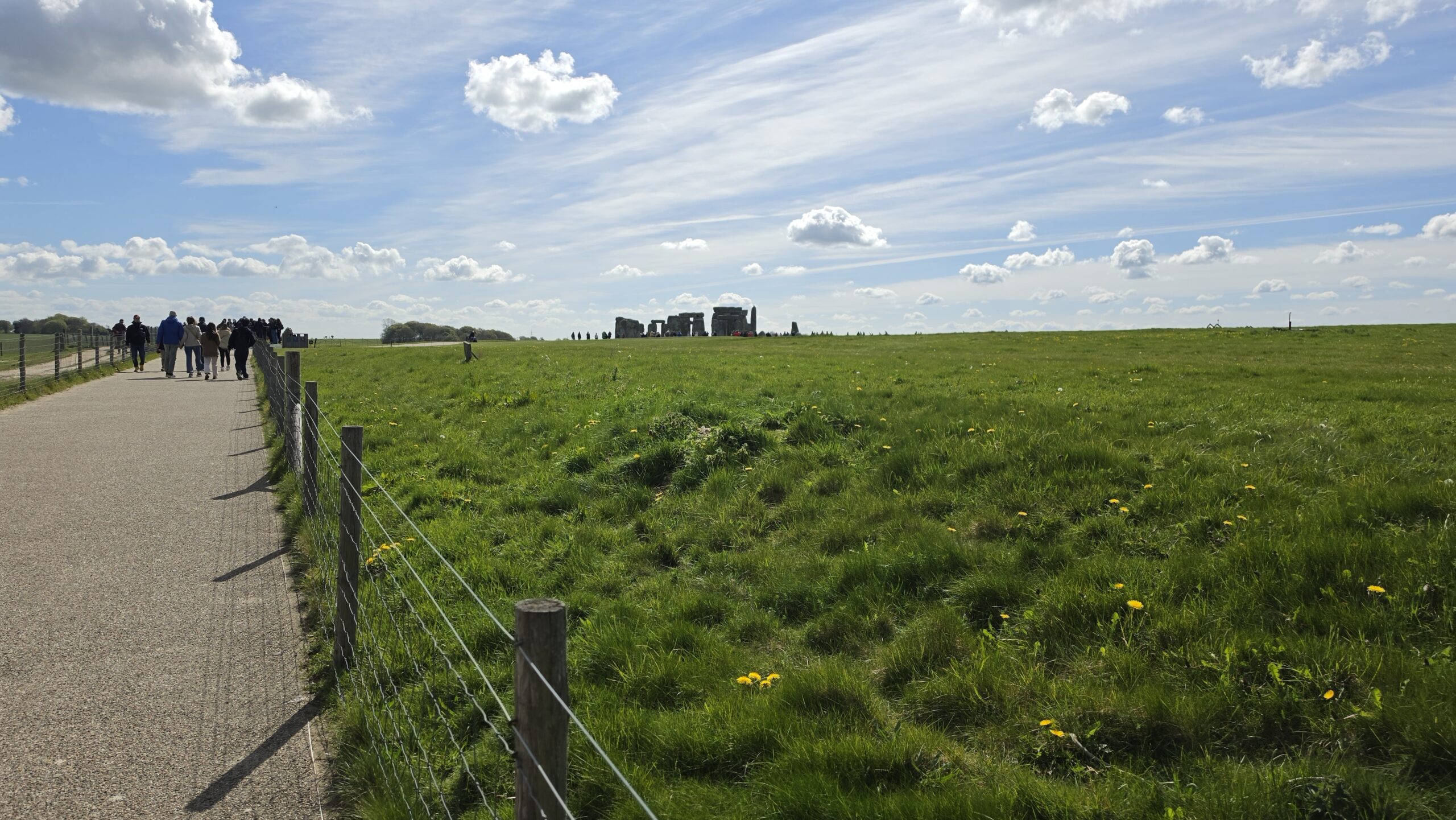
Stonehenge had been on our list for a while, but getting there without a car wasn’t straightforward. Then, while we were house-sitting in Reigate, our generous hosts lent us theirs. That gave Deb and me the chance to make the roughly two-hour drive to Salisbury Plain and finally see the famous stones for ourselves.
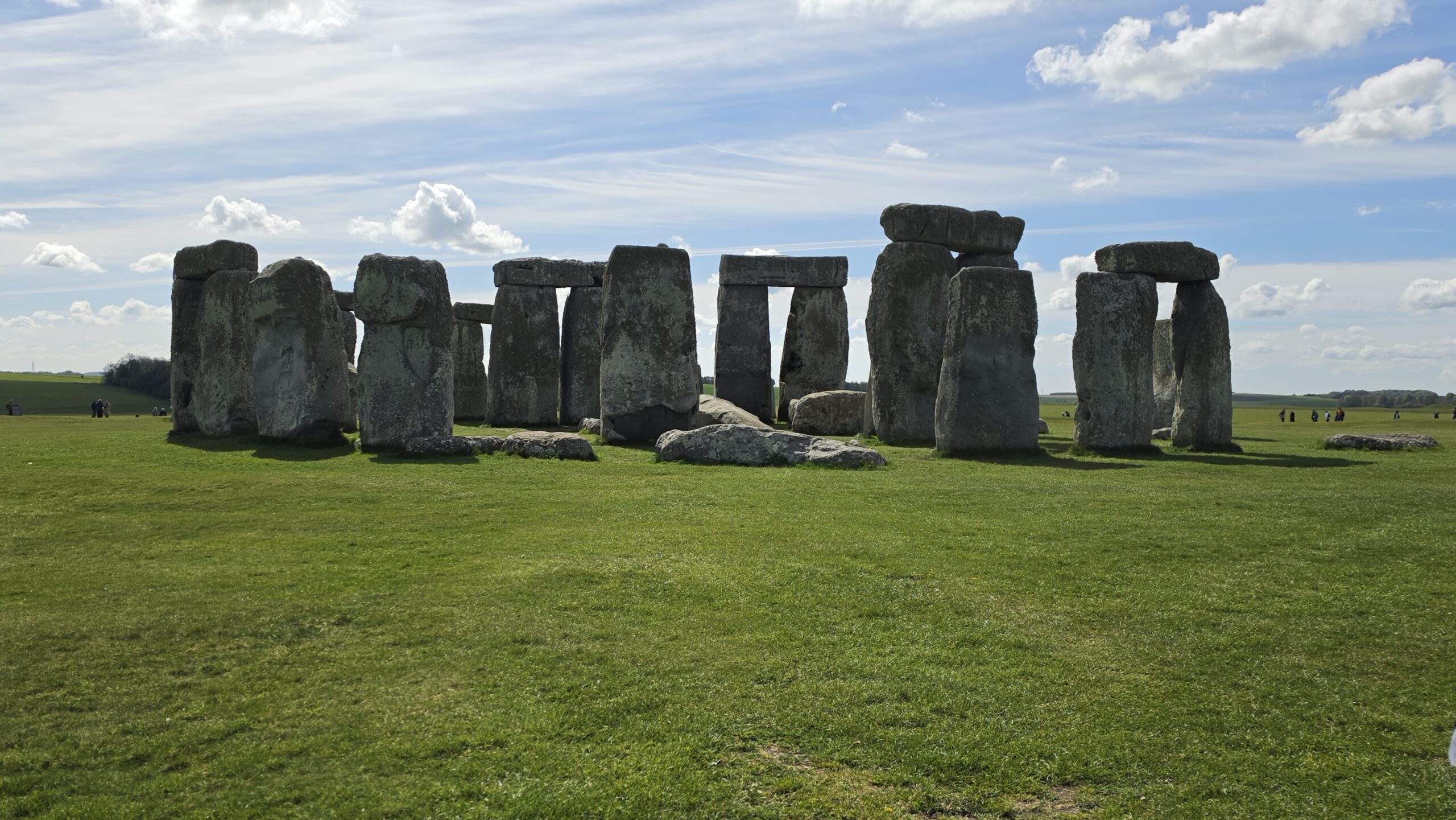
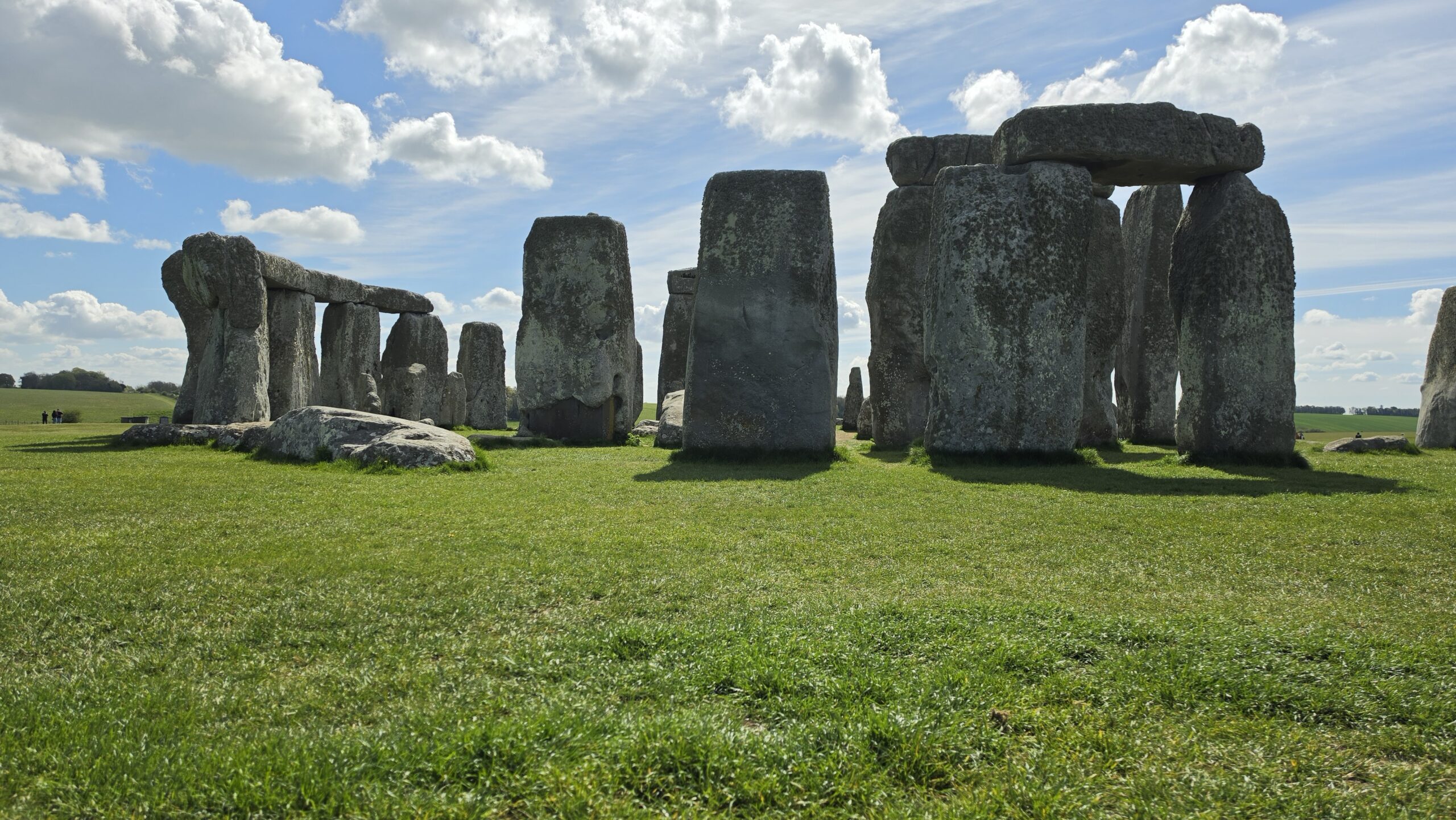
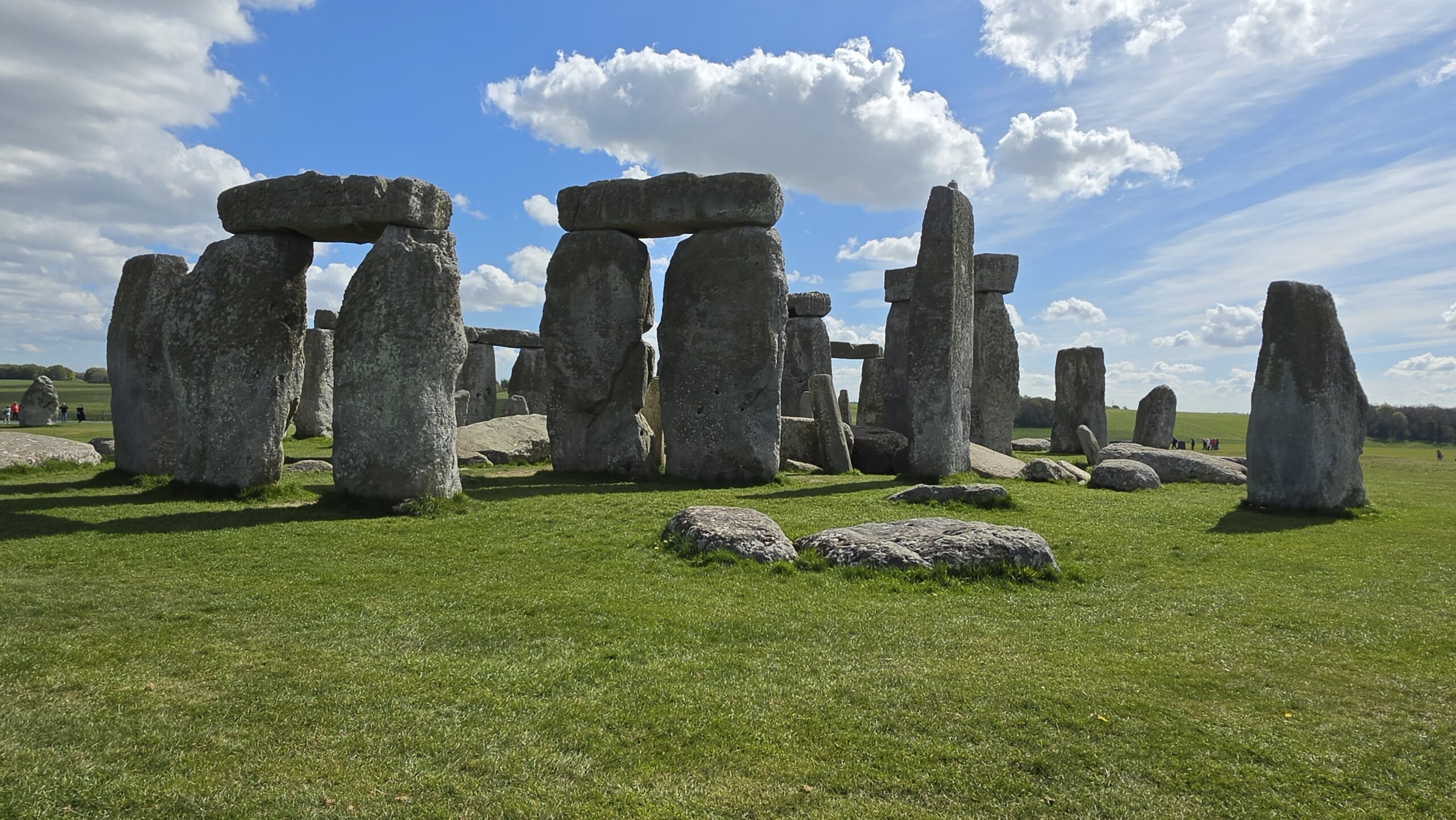
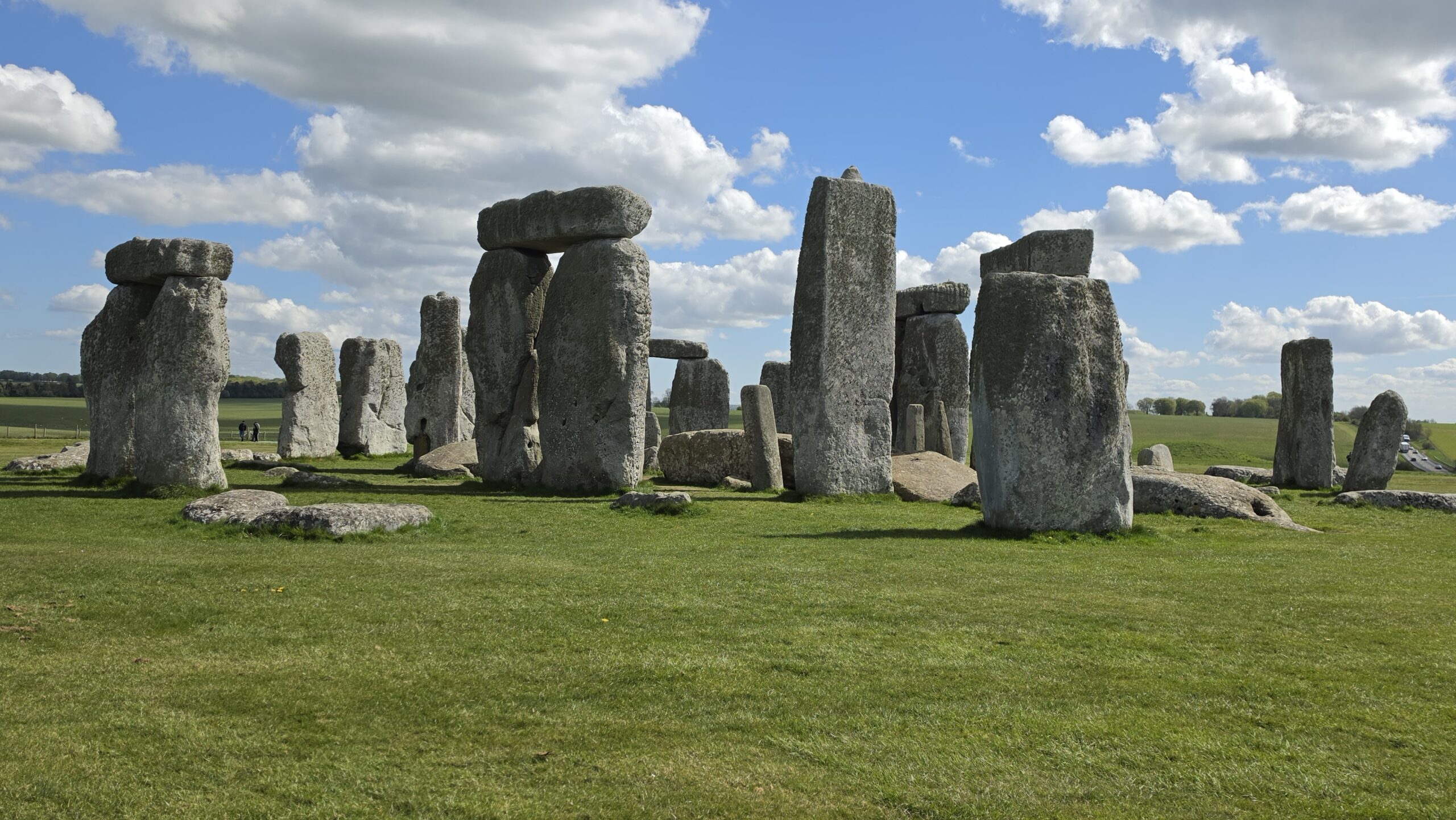
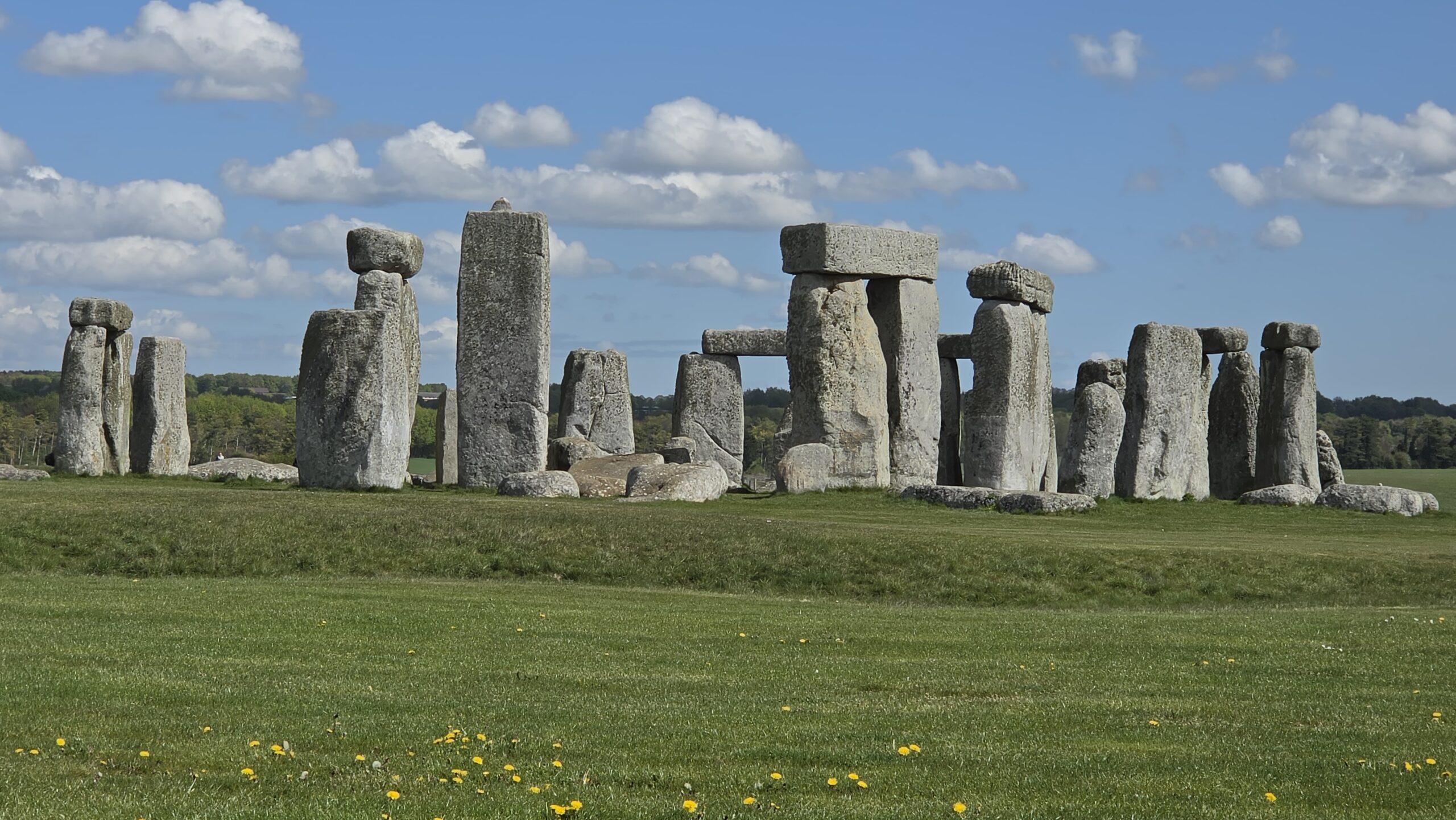
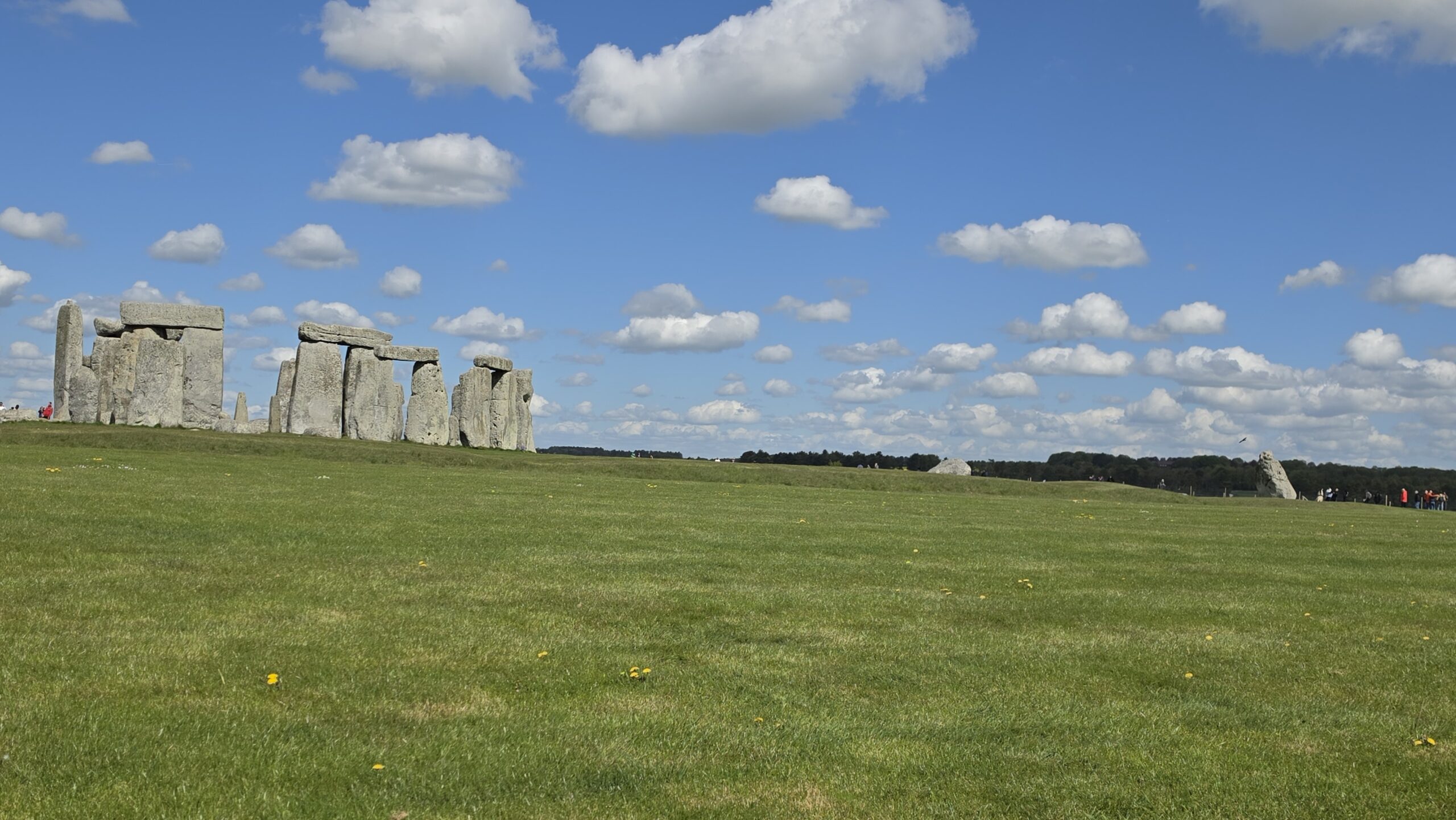
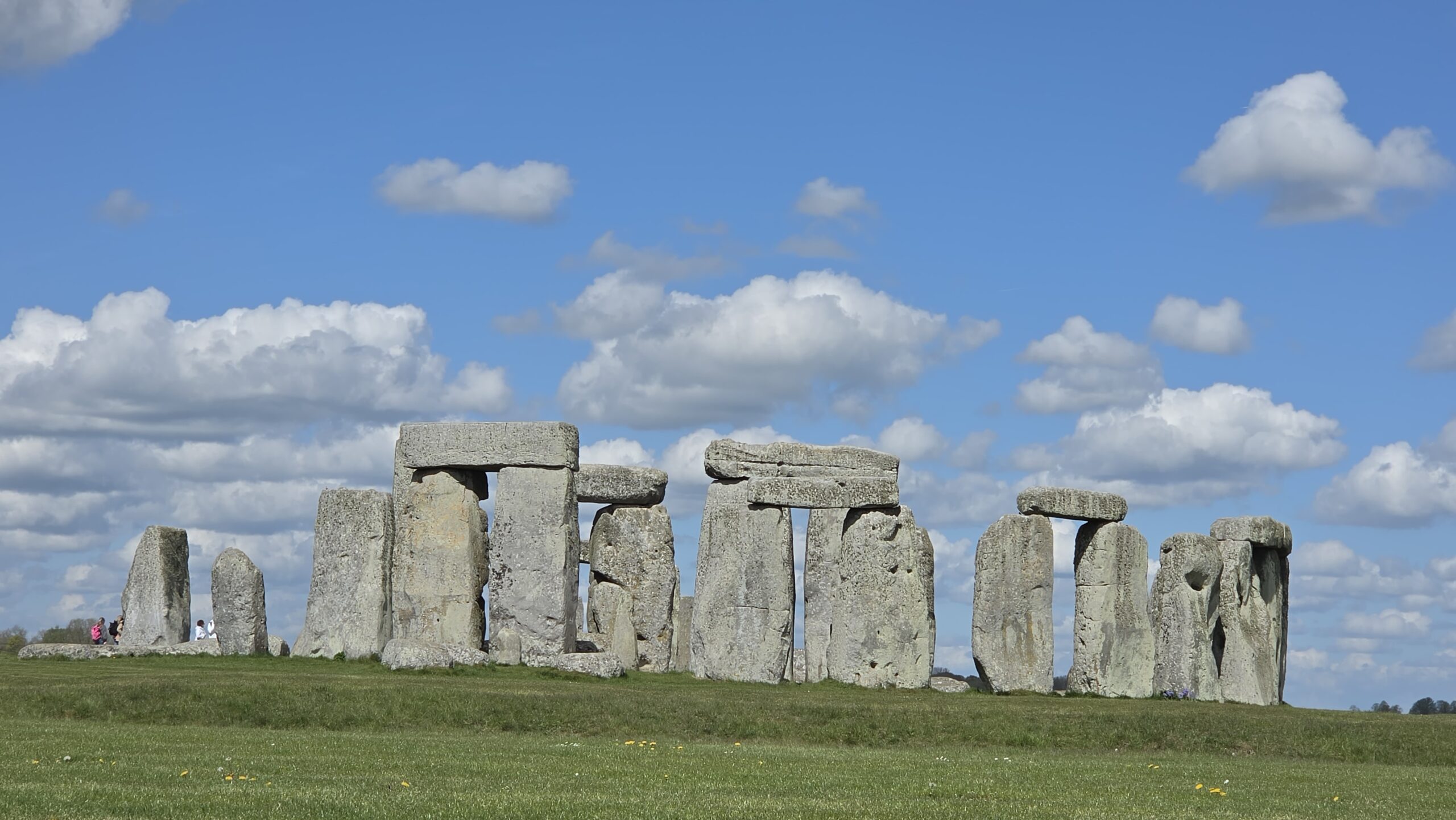
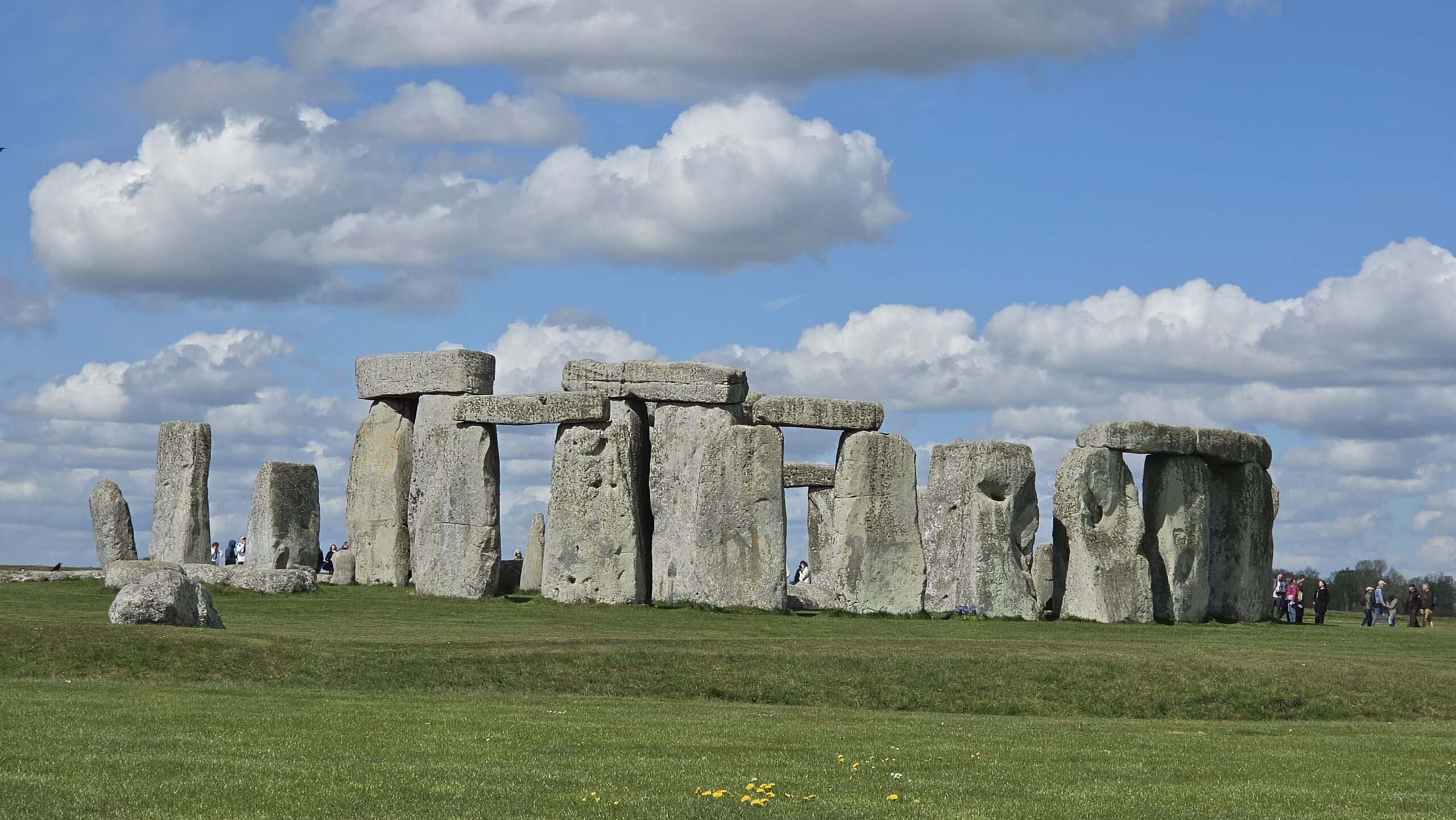
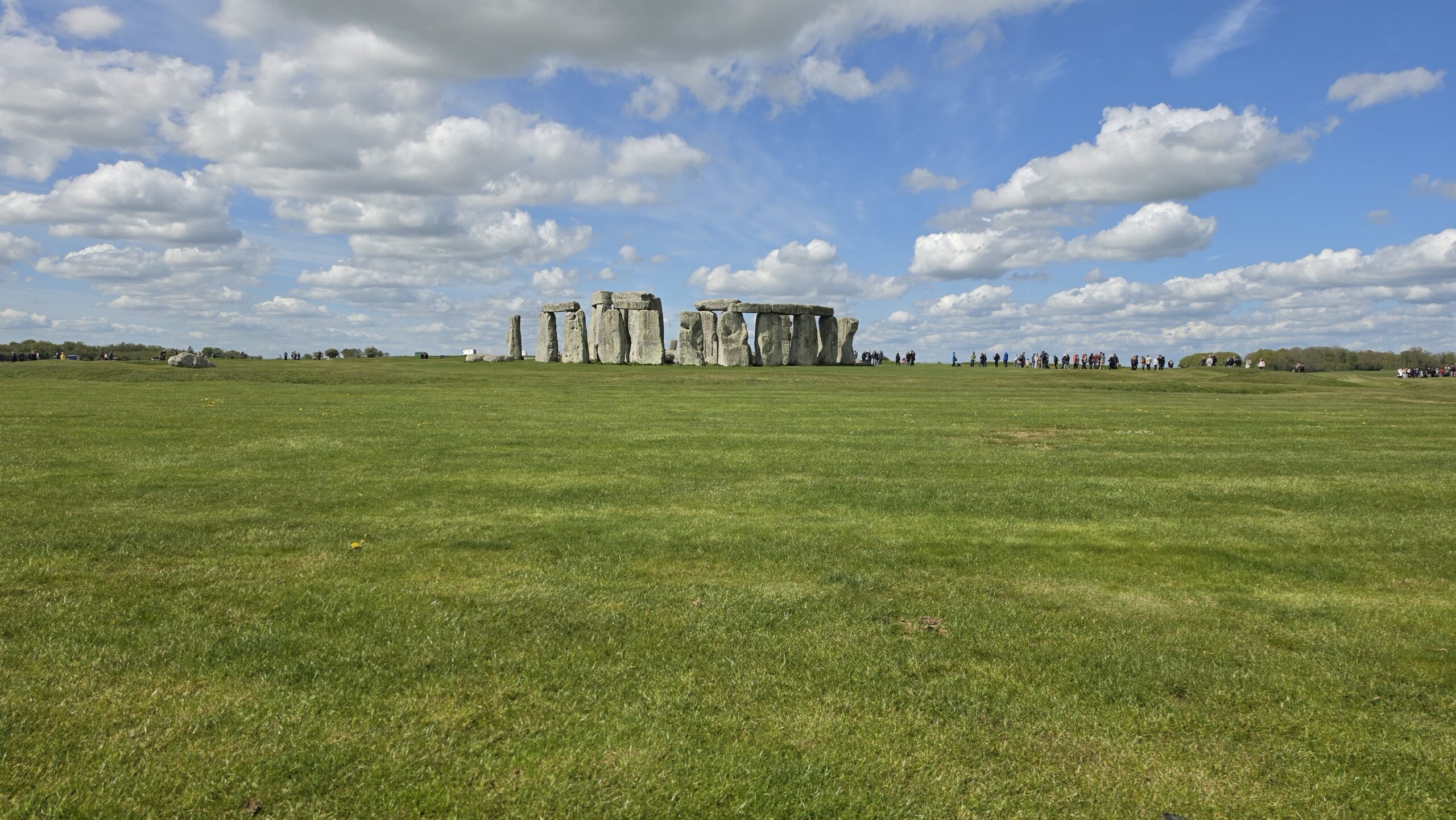
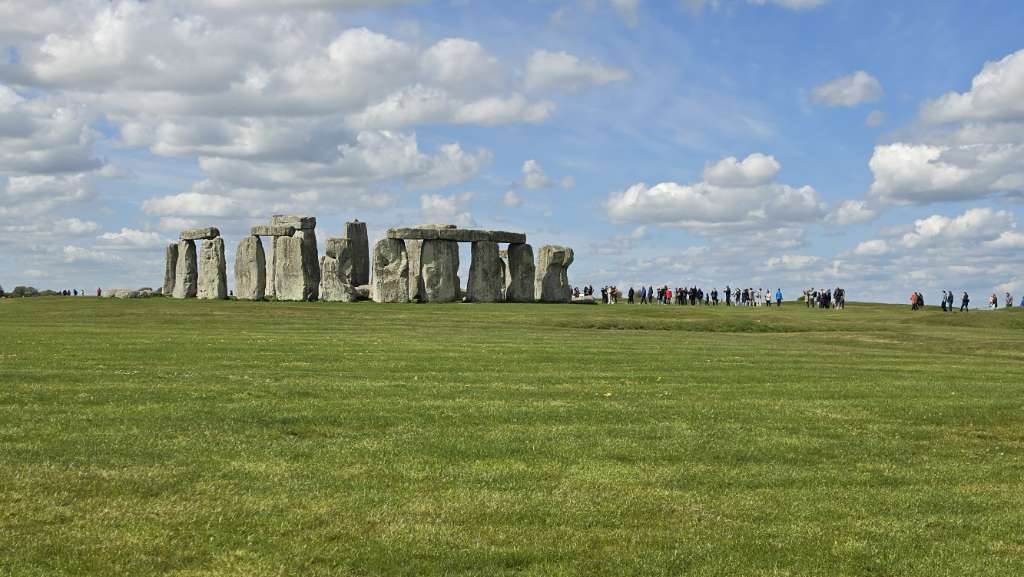
The photographs tell the story of a beautiful day, with blue sky, clouds drifting overhead and green fields stretching away in every direction. We photographed the stones from just about every angle. Quite a few photographs, as it turns out!

Older than you can quite get your head around
The earliest earthwork monument here dates to around 3000 BC, while the great stone settings were built and rearranged over the following centuries, especially around 2500 BC. That makes Stonehenge roughly 4,500 to 5,000 years old. It was already ancient long before the Romans arrived in Britain.
The biggest stones are called sarsens. Some weigh around 25 tonnes, and the upright stones and horizontal lintels were shaped to fit together using joints more often associated with woodworking. The smaller bluestones came from western Wales, an extraordinary journey however they were transported.
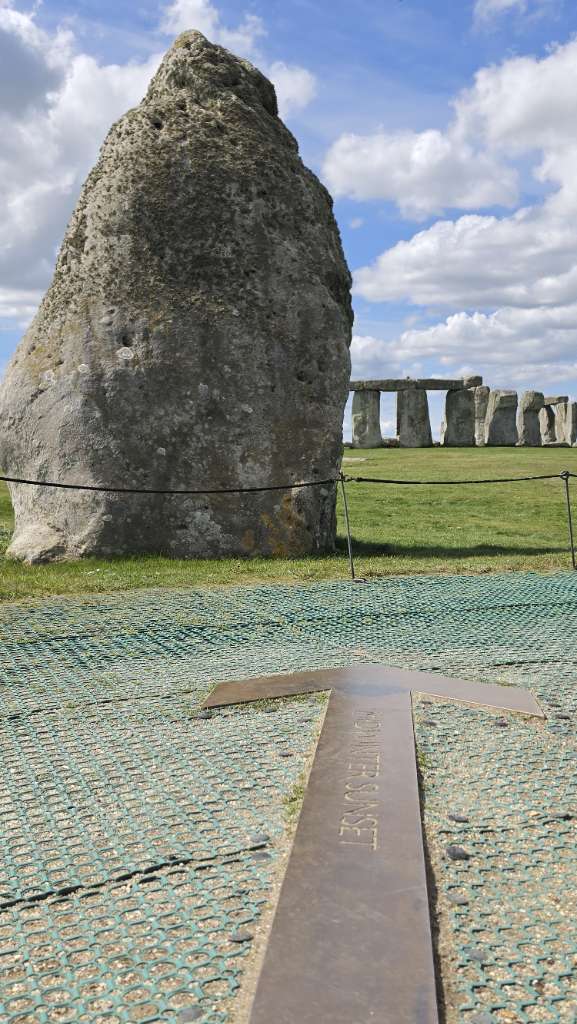
What I loved was seeing the gaps, the fallen stones and the way the surviving lintels still sit across the uprights. It’s one thing to know people built this thousands of years ago. It’s another to stand there wondering how on earth they managed it.


A monument full of questions
Stonehenge is aligned with the sun at the summer and winter solstices. Archaeologists also know the surrounding landscape was used for burials and ceremonies. But exactly what Stonehenge meant to the people who built and visited it is still debated. I rather like that there are some things we haven’t managed to explain away.
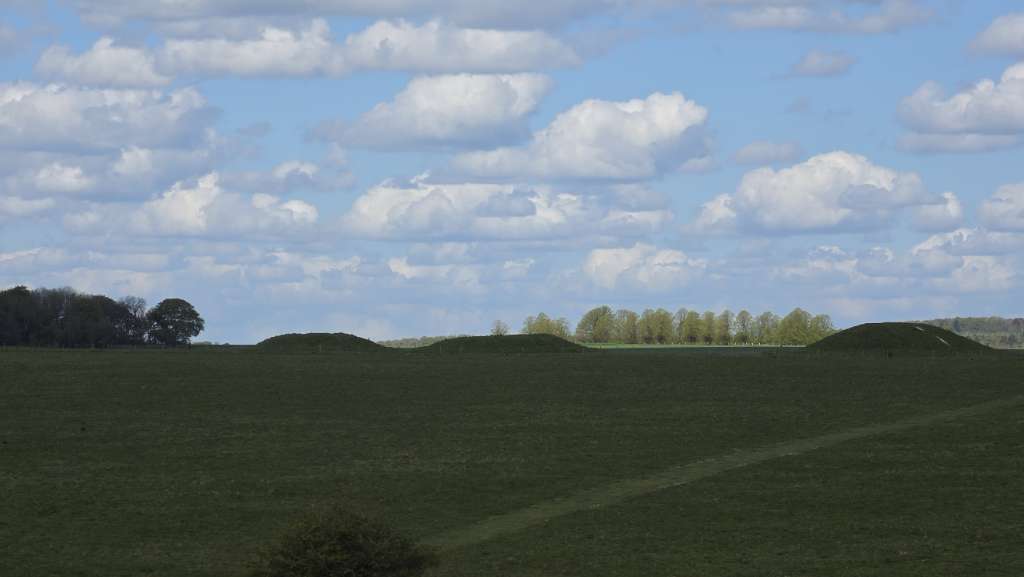
Beyond the circle, the surrounding fields have their own ancient story. The grassy mounds aren’t just random bumps in the landscape: this area contains prehistoric burial mounds, reminders that Stonehenge was part of something much bigger than the stones themselves.

How did they move those things?
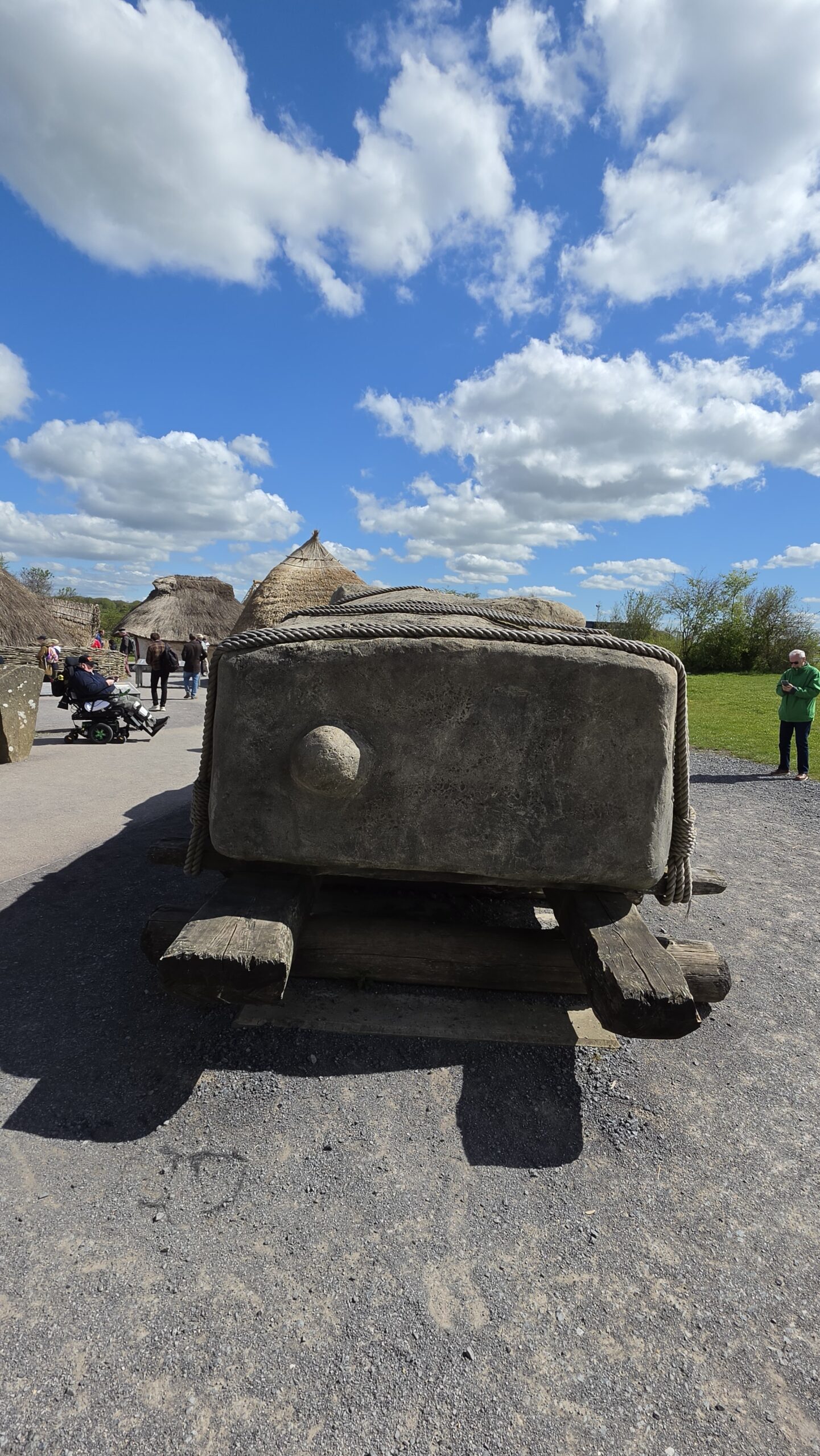
At the visitor area we saw a demonstration stone set on timber runners with ropes, showing one possible way people might have hauled heavy stones. Seeing the ropes and the sheer size of the block really brings the problem home. I can tell you I wasn’t volunteering to pull it!
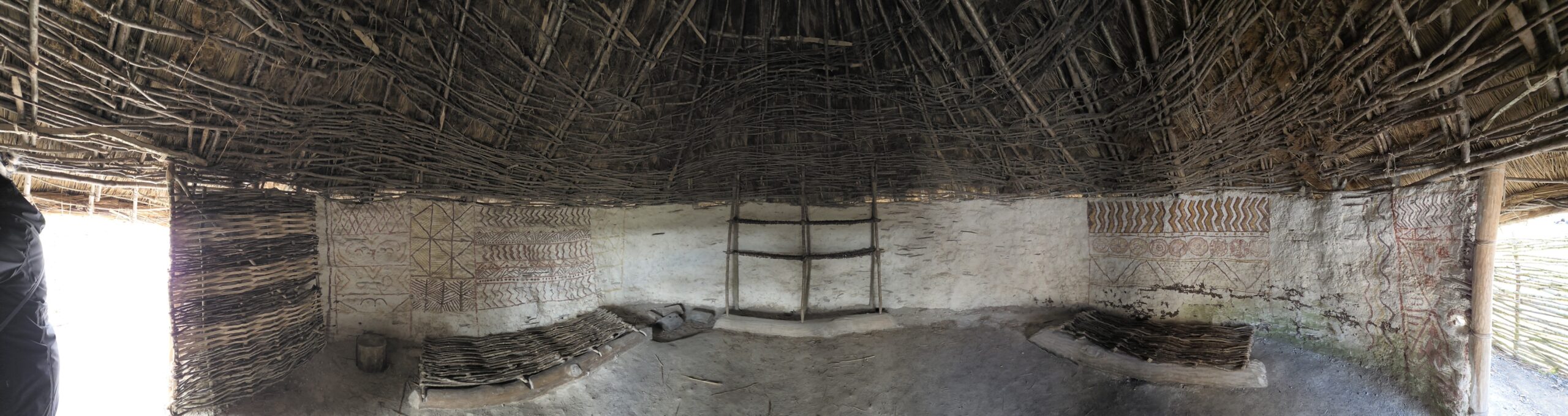
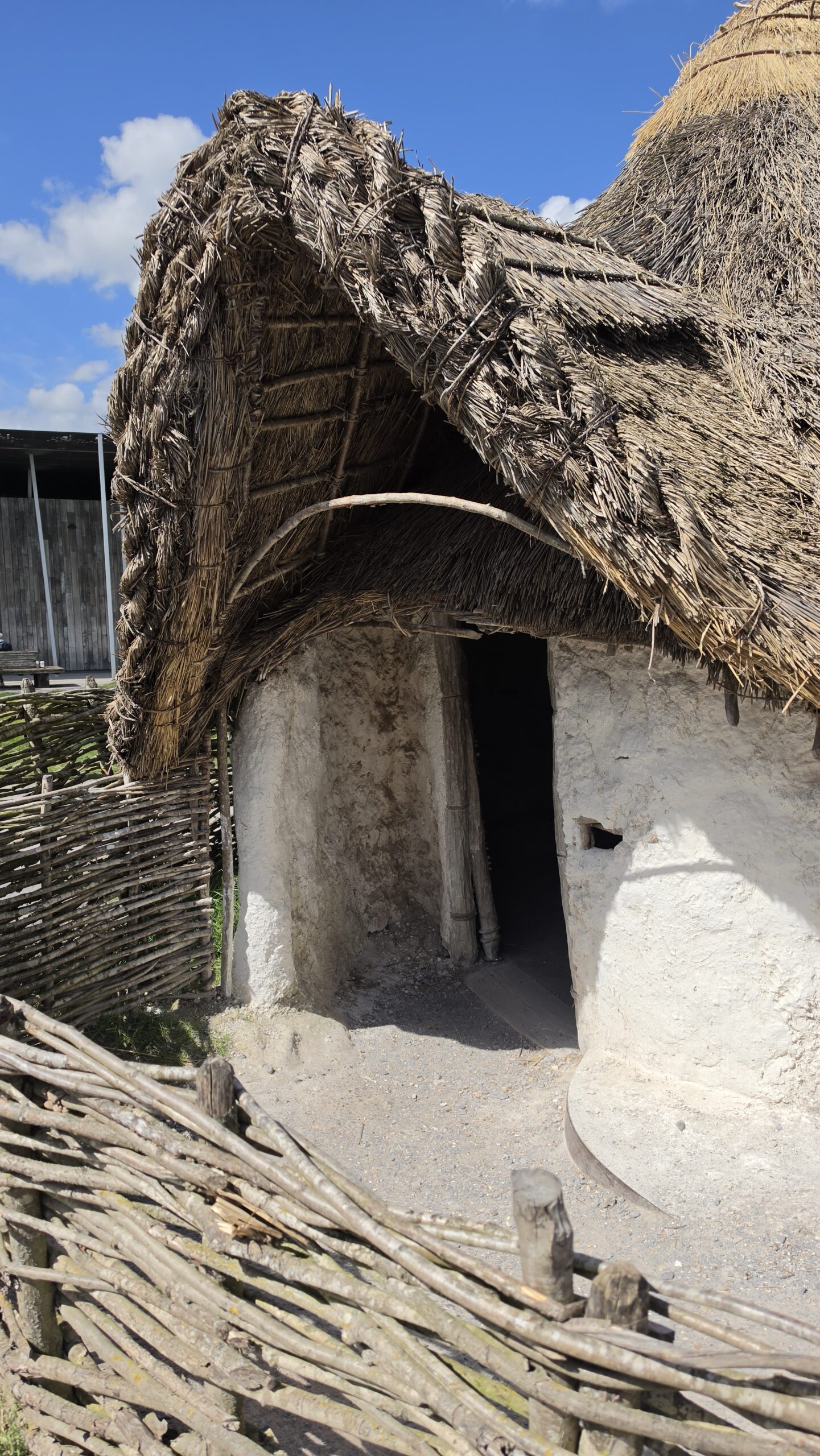
We also looked at the reconstructed Neolithic houses, based on archaeological evidence from nearby Durrington Walls. With their thick walls, thatched roofs and simple interiors, they offer a glimpse of everyday life around the time the stone circle was being built. It made the people behind the monument feel a little more real.





A laugh in the gift shop
After we’d finished exploring Stonehenge, Deb and I tried on flat caps in the gift shop and took a photo together. We couldn’t resist a laugh and a photo after a day surrounded by all that history.
I was in awe. You can see Stonehenge in photographs a hundred times, but nothing quite prepares you for standing there in front of those enormous stones, knowing they’ve been there for thousands of years. And what a lovely opportunity that borrowed car gave us. And yes, there are a lot of photographs. Some places deserve more than one angle.

We explored more of the area’s history at Old Sarum and Salisbury Cathedral.