Kew Gardens | During our Teddington house sit, spring 2026
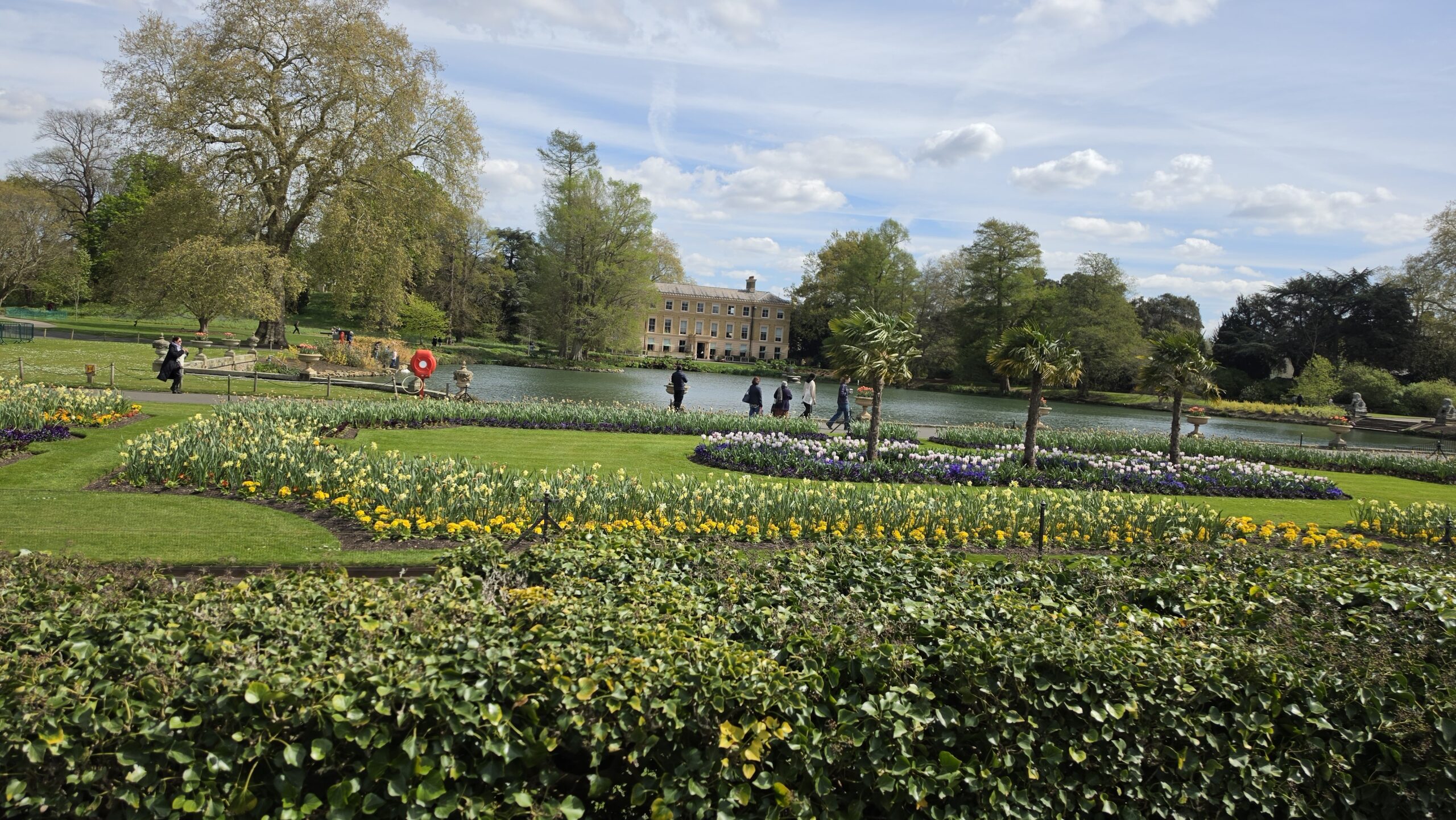
Our time staying in Teddington gave us the chance to explore places that might otherwise have been a quick name on a sightseeing list. Kew Gardens was one of those outings, and the photographs tell you just how much there was to look at: spring flowers, enormous glasshouses, tropical greenery and even a little royal palace.
A very grand glasshouse
The Palm House is hard to miss. From the lawn it looks like an enormous glass-and-iron shell, with a curved roof stretching out in both directions. I took more than one photograph of it. Naturally.


It is a rather clever piece of Victorian engineering. Designed by Decimus Burton and built by Richard Turner between 1844 and 1848, it used glass and iron technology influenced by shipbuilding. Kew even describes its shape as resembling an upturned ship.
Into the greenery
Inside, the paths ran through towering palms, enormous leaves and layers of plants that made the glass roof feel quite a long way above my head. The camera kept coming out. There were dense green corners, brighter stretches of walkway and some rather striking red flowers among the leaves.


The tower that wasn’t quite what it seemed
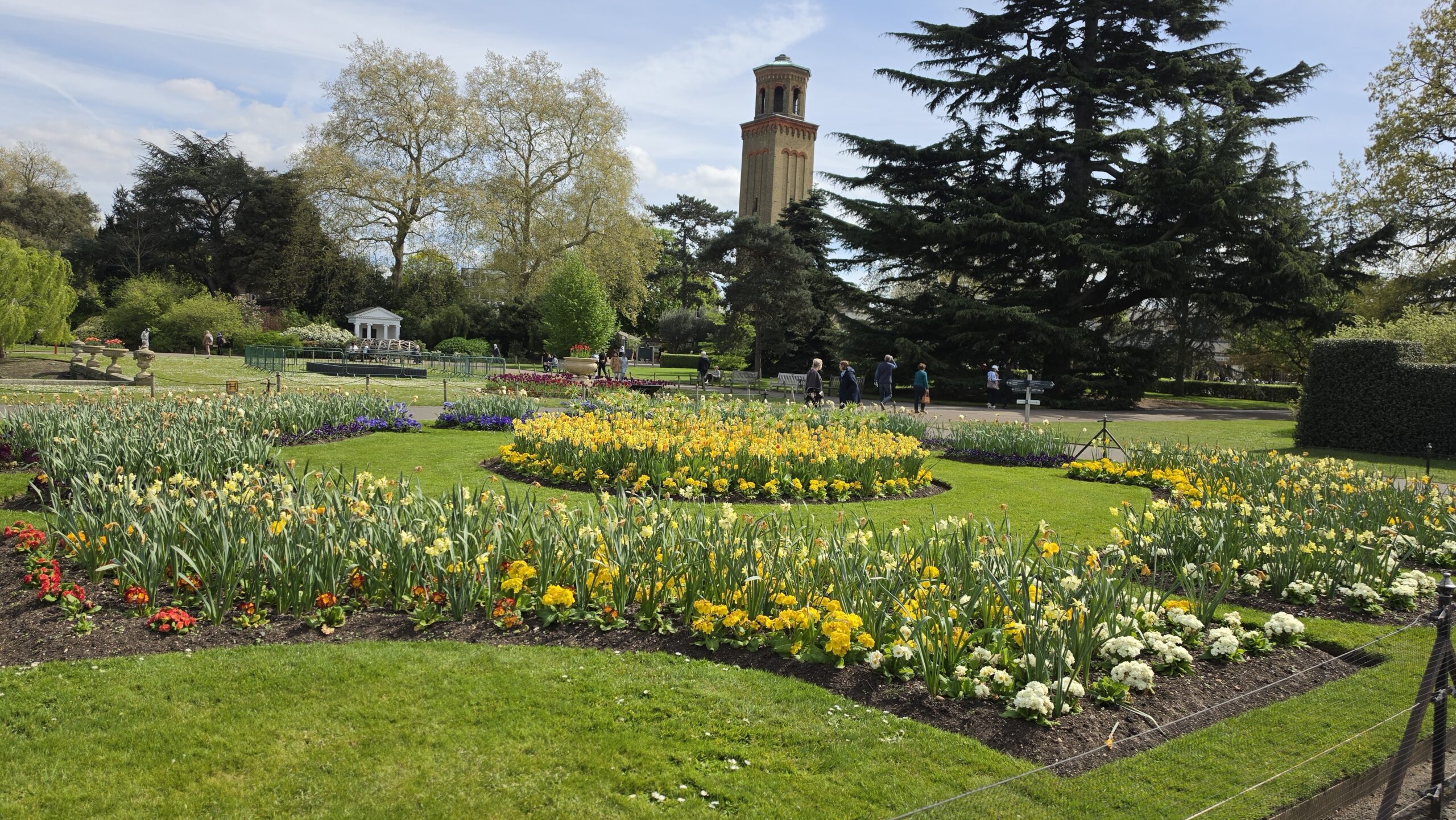
Outside was a tall brick tower that looked as though it ought to have bells in it. In fact, Kew’s Campanile, built in 1847, was originally the chimney for the boilers that heated the Palm House. A very elaborate way to deal with the heating!

Spring flowers also made an appearance around a handsome set of gates. I loved the colours against the old stonework.


And a royal palace in the gardens
There is an entirely different sort of history at Kew Palace. The red-brick building looks surprisingly modest when you think of the word palace. It began as a private mansion in 1631, before becoming part of the story of George III, Queen Charlotte and their family. From the lawn, its rows of windows and tall chimneys made another beautiful photograph.
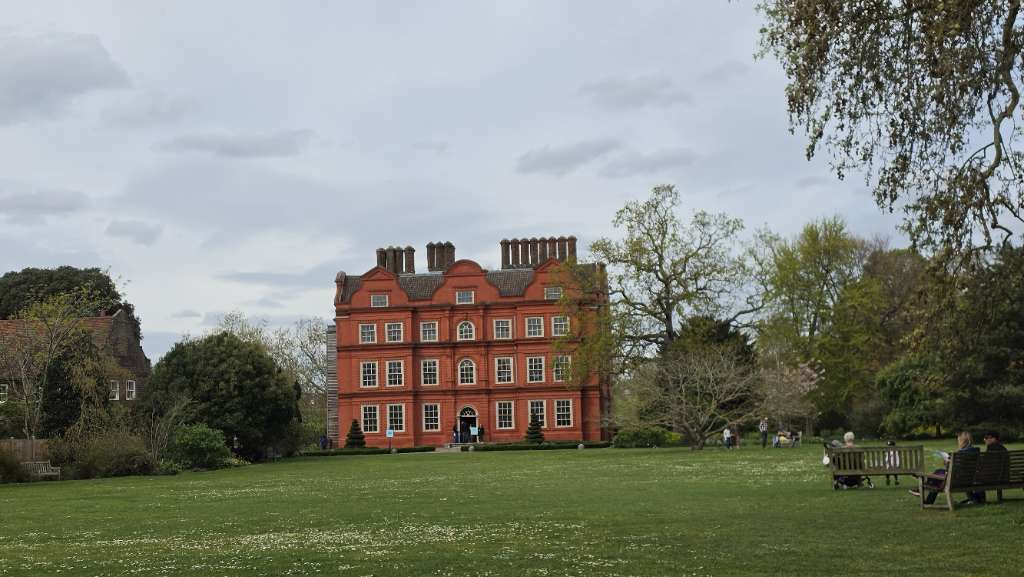
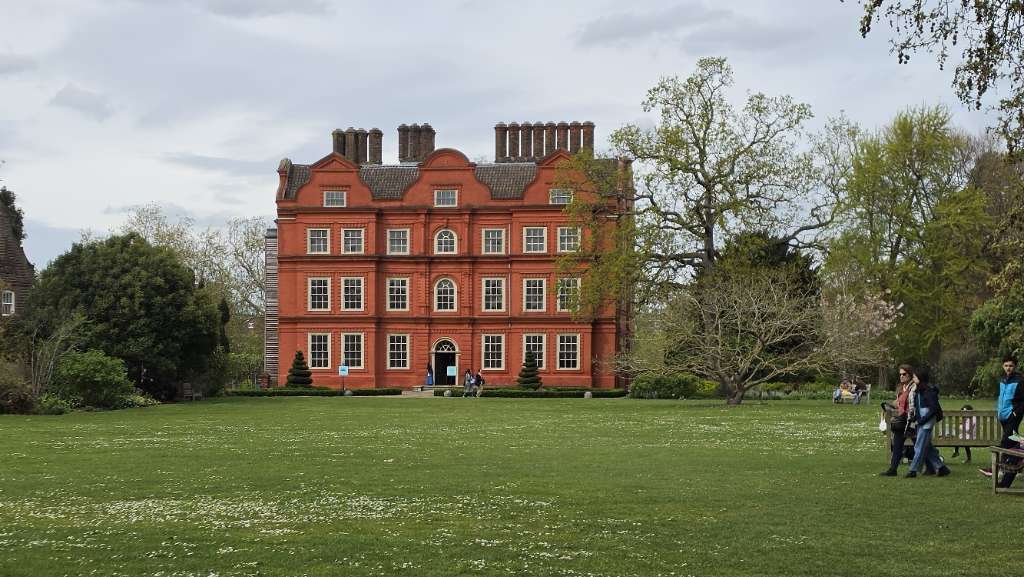
What I liked about these photos is the mix of it all: tropical plants, Victorian ingenuity, spring flowers and centuries of royal history in one outing. Not a bad way to spend part of our time in this corner of London.
Our time around Kew included a rather different outing to the National Archives for some family-history research.